Harsiddhi Mata Mandir
The Shaktipeeth of Ujjain, where two towers of lamps are lit for the Mother
Today at the mandir
- Lit lamp: darshan is open
- Unlit lamp: closed
- Morning aarti, 7:00 AM
- Evening aarti and lighting of the deep-stambhs, 6:00 PM
Each niche is one hour. Times are in Indian Standard Time.
See all timings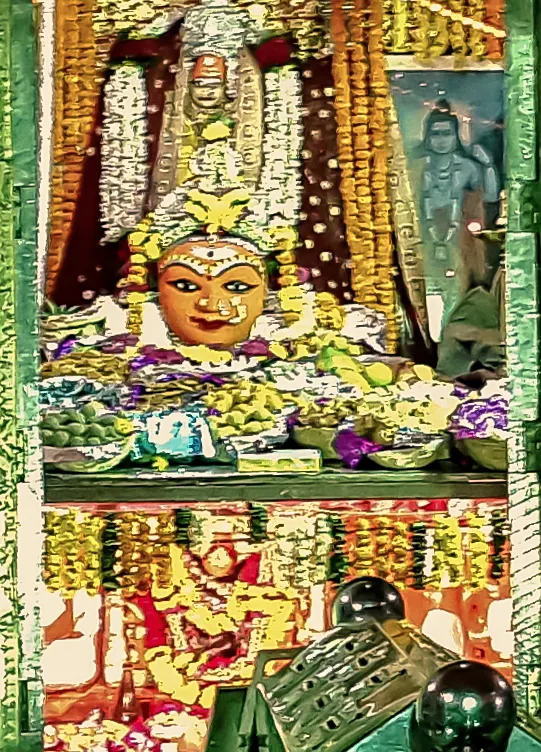
Shri Harsiddhi Mata Mandir stands beside Rudra Sagar in Ujjain, a short walk from the Mahakaleshwar Jyotirlinga. Tradition counts it among the Shaktipeeths, the place where the elbow of Goddess Sati is believed to have fallen, and remembers the goddess as the family deity of King Vikramaditya. The temple is best known for its two tall deep-stambhs, stone lamp towers that are set alight with hundreds of oil lamps at the evening aarti.
Read the full account- Presiding deity
- Goddess Harsiddhi, with Mahalakshmi, Mahasaraswati and Annapurna in the sanctum
- Tradition
- Shakta (goddess worship); revered as a Shaktipeeth where Sati's elbow is believed to have fallen
- Known for
- Two deep-stambh lamp towers, about 51 feet tall, lit at the evening aarti
- Era
- Founding credited by tradition to King Vikramaditya; the present structure dates from the Maratha period
- Sacred emblem
- A Sri Yantra, the symbol of Shakti, is enshrined in the temple
- Location
- Beside Rudra Sagar, about 500 m from Mahakaleshwar Temple, Ujjain
- Main festivals
- Sharadiya Navratri and Chaitra Navratri
- Entry
- Free for all devotees
Darshan timings
Darshan hours
- General darshanEvery day5:00 AM to 7:00 PM
Hours as published by MP Tourism. Other listings say the temple stays open until 9 or 10 pm, and in practice darshan continues through the evening aarti. Hours are extended during Navratri. Please confirm locally.
Aarti and daily rituals
- Morning aartiEvery day7:00 AM to 8:00 AM
Most sources place the morning aarti between 7 and 8 am; one listing gives 5:30 am.
- Evening aarti and lighting of the deep-stambhsEvery day6:00 PM to 7:00 PM
Preparation and lighting of the lamp towers begins about an hour before the aarti. A temple priest quoted in the press and MP Tourism both put the aarti itself at about 7 pm, so the ceremony can run past 7 pm. The time shifts a little with sunset.
Timings change on festivals, eclipses and special days. Confirm at the mandir before you travel.
Puja and seva
Booking here only reserves your place. You pay at the mandir counter; this website takes no money.
- Ask about this puja
Deepmalika (lighting of the lamp towers)
The best-known offering here. Devotees, usually in thanks for a fulfilled wish, sponsor the oil and wicks for both towers, which are lit at the evening aarti. Booking is done through the temple office and dates fill up months ahead. Press reports from 2023 mention a shared (collective) booking at ₹3,100 per devotee and put the cost of lighting both towers at roughly ₹15,000; current charges must be confirmed with the temple.
- Ask about this puja
Morning aarti
The daily morning worship of the goddess with lamps, bells and hymns. Devotees may attend freely.
- Ask about this puja
Sandhya (evening) aarti
The evening aarti, performed as the lamp towers glow in the courtyard. It is the most attended ritual of the day and no ticket is needed.
Festivals through the year
- OctoberAshwin Shukla Pratipada to Navami (September or October)
Sharadiya Navratri
The biggest festival of the temple. For nine days the goddess is elaborately adorned, the lamp towers are lit each evening and devotees queue from early morning. Special evening aartis are held, and the administration regulates entry to the sanctum.
- OctoberEighth and ninth days of Navratri
Durga Ashtami and Mahanavami
The peak days of Navratri. The Skanda Purana names Mahanavami as especially sacred to Harsiddhi, and the crowds are at their largest on these two days.
- AprilChaitra Shukla Pratipada to Navami (March or April)
Chaitra Navratri
The spring Navratri, which opens the Hindu new year, is kept with the same nine days of worship and nightly lighting of the deep-stambhs.